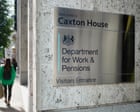
Work and pensions secretary says DWP disruption a 'serious cyber incident'
Work and pensions secretary Pat McFadden said there is no evidence so far that any personal details were compromised in a cyber incident which prompted the DWP to take some services offline.
Asked whether the incident was a malicious act, McFadden said it was a “serious cyber incident”, adding the investigation is ongoing.
Here is Pat McFadden’s statement to the media in full:
We had reports of a cyber incident yesterday, and as a precautionary measure, we’ve taken our systems down in order to protect the public.
There’s no evidence of anyone’s personal details being compromised, although it is an ongoing investigation, and regular payments to the public are continuing as normal.
It’s a serious cyber incident, I can’t say more at this stage about what caused the incident, but we did the right thing by taking our systems down in order to protect the public, in order to protect their personal information, and made sure that regular payments could continue unaffected.
We are working with the national cyber security centre to try to get our systems back up and running as quickly as possible, and that effort is ongoing and it’s the whole focus of the department right now.”
Work and pensions secretary says DWP disruption a 'serious cyber incident'
Work and pensions secretary Pat McFadden said there is no evidence so far that any personal details were compromised in a cyber incident which prompted the DWP to take some services offline.
Asked whether the incident was a malicious act, McFadden said it was a “serious cyber incident”, adding the investigation is ongoing.
A cyber security expert has warned that scammers could try to take advantage of concerns surrounding the DWP disruption, particularly among benefit claimants worried about missed payments or difficulties accessing services online.
Luis Costa, from the cyber security company Surfshark, said:
Criminals may exploit the disruption to online services by posing as DWP representatives and offering to help claimants access their accounts or submit income details.
For someone relying on their next universal credit payment to cover rent or household bills, a call claiming they could miss out on their money unless they verify their details immediately could be particularly convincing. Scammers know that financial pressure can make people act before questioning whether a call is genuine.”
Costa advised claimants to be wary of unexpected calls, texts or emails claiming to offer help with their benefits or warning that payments could be at risk.
He urged people not to share personal information, bank details or security codes, click on suspicious links or pay fees. Anyone receiving a suspicious call should hang up and contact the DWP directly using the details on the government website.
Also today, the government is to back legislation aimed at preventing wealthy and powerful individuals using the courts to silence critics and curb free speech.
The justice minister Sarah Sackman told parliament on Friday that Labour would support a private member’s bill sponsored by the Conservative MP John Whittingdale, who is spearheading the latest attempt to bring in anti-Slapp measures.
She told the Guardian: “Our legal system should be a route to justice, not a weapon of intimidation, used to evade scrutiny, suppress reporting or discourage people from speaking the truth.”
The bill attempts to define abusive cases, often referred to as strategic litigation against public participation, or Slapps, so that they can be dismissed early before defendants incur unaffordable legal costs.
Work and pensions committee chair backs DWP decision to take services offline
Debbie Abrahams, the Labour chair of the work and pensions committee, said the DWP was right to take “swift action” to contain the impact of the cyber incident and restore services.
She said it was a “great relief” that benefits and pensions payments had not been affected.
The DWP has taken swift action to contain any potential further damage from the cyber incident and so that service is restored as soon as possible.
Although this may interrupt some services, this was absolutely the right thing to do.
It’s critical that the impact on service users from the outage is investigated and analysed so that timely and accurate advice can be given to them.”
Anyone trying to check their state pension, make an application for disability benefits or claim universal credit was not able to do so on Friday morning. Department for Work and Pensions officials say payments will continue to be made as normal.
Have you been affected by the disruption and if so, how has it impacted you? Do you claim employment or disability benefits or a pension? Do you have concerns?
In other news, around a third of England’s rough sleepers have so far been offered a route off the streets as part of Andy Burnham’s Christmas pledge.
There were an estimated 9,369 people sleeping rough in England over the month of September, data published by the government on Friday showed.
Separate data also published by the Ministry of Housing, Communities and Local Government (MHCLG) showed that, in October, 3,276 people sleeping rough had received at least one offer of a route off the streets across areas which had been given funding at the end of September as part of the Rough Sleeping Programme.
Housing charity Shelter welcomed the figures as “a good start in helping everyone off the streets by Christmas”.
But the charity added: “With nearly two thirds of people still waiting for an offer of a bed, it [government] needs to put its foot on the gas to make sure no one risks their lives on the street this winter.”
Downing Street says no evidence other government departments are being targeted
Downing Street said there was no evidence that a “malicious actor” is targeting other government departments, after the DWP took some of its services offline following what it described as a “cyber incident”.
A spokesperson said work was being carried out “as quickly as possible” to restore services, some of which appeared to be unavailable this morning, including applying for universal credit or searching for a job, the Press Association reported.
The spokesperson said: “The investigation is ongoing. I’m not going to get ahead of it.
“There’s no other evidence that a malicious actor is targeted any other government departments.”
The incident comes days after the government issued an alert warning of an increased risk of Russian sabotage attacks in the UK, particularly against businesses supporting Ukraine.
The DWP’s most senior official told a committee of MPs this month that cybersecurity and resilience was one of the issues “that keeps a new permanent secretary awake”.
Sarah Healey, the DWP permanent secretary, was appearing before the work and pensions select committee, where she was asked who would ensure that DWP systems would “not be the frontline in some sort of hybrid warfare from the Kremlin”.
Supermarket fridges and freezers in seven European countries malfunctioned earlier this month, with their thermostats remotely cranked up in some cases to 50C (122F), in what was blamed on a cyber-attack. The EU has condemned what it said was “a deliberate attempt to disrupt our food supply chain and undermine consumers’ confidence in it”.