More ways for Singapore retail investors to buy gold, but volatility remains a risk
As banks widen gold access, experts say the metal still carries risks for local investors.
SINGAPORE: More accessible gold investment options could draw more retail investors, but liquidity gains are likely to be modest and volatility remains a risk, analysts said.
OCBC and DBS have both expanded their physical gold offerings this year, after demand for the metal pushed prices to an all-time high of US$5,600 per ounce in January.
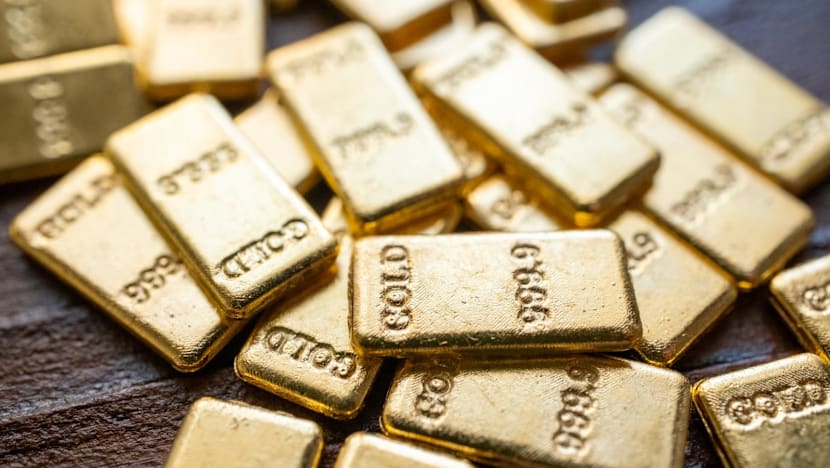
In June, DBS announced it would offer physical gold tokens to retail customers through its digibank app in the second half of 2026. The tokens will be launched soon, said the bank’s group head of investment product and advisory James Tan.
Also from June, OCBC’s institutional clients and the high-net-worth and ultra-high-net-worth clients of its private banking arm, Bank of Singapore, could buy and store physical gold bars with the bank.
UOB was previously the only bank in Singapore offering physical gold products to retail investors.
Investors can now start with smaller amounts and no longer need to store physical gold themselves, said Tiger Brokers’ chief market strategist James Ooi.
That could encourage more retail participation, increase trading activity and improve liquidity over time, he said.
OCBC’s FX strategist Christopher Wong agreed that Singapore’s market could see more liquidity as more investors take part, but this was unlikely to happen overnight.
“More products do not necessarily mean more trading,” he added.
The impact on the wider market is likely to be modest, said trading platform eToro’s market analyst Zavier Wong.
“Singapore doesn't set the gold price, and having a few more retail products on offer won't have a material impact on a market that's been driven all year round by the Fed, the US dollar, and central bank buying,” he said.
The queues for physical gold earlier this year were a clear sign of interest, and the new products give an easier route to first-time buyers who would not have considered physical gold because of storage and security concerns, he added.
But convenience is not the same as market liquidity, said Assistant Professor Goh Jing Rong, who teaches economics at the Singapore Management University (SMU). He expects a modest impact on trading liquidity.
Since the gold price is set globally, retail demand is unlikely to move prices in a meaningful way, Asst Prof Goh said. He added that retail money risks staying parked in gold, which may shift funds away from equities.
A SAFE HAVEN IS NOT ALWAYS SAFE
DBS and UOB both said they saw sustained year-on-year increases in gold investments.
DBS’s gold investments tripled in 2025 from a year earlier, Mr Tan said. About 90 per cent of customers who bought paper gold on its online banking platform, launched in August across Singapore, Hong Kong and Taiwan, were first-time investors in the product, he added.
UOB’s transaction volumes by weight in its physical gold business grew about 59 per cent in 2025 from the year before, said Mr Kelvin Ng, the bank’s head of global group markets. Transacted volumes under its Gold Savings Account rose 48 per cent year on year, he added.
Analysts and experts nevertheless cautioned investors against putting all their eggs in one basket.
Gold has gained popularity because of its strong performance in recent years and its “safe haven” status, but it still carries market risks and can be highly volatile, said Tiger Brokers’ Mr Ooi.
While gold is an effective portfolio diversifier, investors should avoid putting too much of their exposure in a single asset class, he added.
Gold prices have dropped since hitting an all-time high earlier this year, falling more than 1 per cent on Nov 18 to their lowest level in over a year at US$3,796.37 per ounce.
A “safe haven” asset is not “always safe”, said Asst Prof Goh. Prices are down by more than 30 per cent from the January record, and those who bought near the peak are still sitting on sizeable losses, he noted.
“It's also important to be aware of currency risk. International gold prices are quoted in USD, thus a stronger SGD can erode returns for local investors, even if gold prices hold steady,” he added.
He described gold as a form of insurance rather than a growth engine. It pays no interest or dividends, so returns rely on someone paying more for it in the future, he said.
OCBC's Mr Wong cautioned against mistaking easier access for a reason to chase prices higher.
“Gold has performed well over recent years, but it can still experience sharp corrections, particularly when US interest rates and the dollar move higher,” he said.
Investors should also note the differences between physical gold, exchange-traded funds and digital gold products, as transaction fees, storage costs and currency exposure can affect returns, he added.
“We remain constructive on gold over the medium term, but that does not mean prices will move higher in a straight line. Investors should consider gold as part of a diversified portfolio, rather than a short-term speculative trade.”
Analysts and experts said the moves tie in with Singapore’s efforts to develop its gold market and strengthen its position as a regional trading centre.
The Monetary Authority of Singapore (MAS) launched its gold vaulting service for central banks on Nov 10, with capacity for up to 500 tonnes of gold. The government has also said it plans to waive taxes on some wholesale services related to investment precious metals.
The Singapore Exchange and six banks aim to finish preparations for an over-the-counter gold clearing system by the end of this year. Live trading and market operations are expected to start in the first quarter of next year.
MAS had earlier said it would develop measures to strengthen Singapore’s gold ecosystem as interest grows. Its chairman Gan Kim Yong said at the time that demand for gold is rising given the increasingly uncertain external environment, with investors and central banks looking for resilience and diversification.
"Singapore does not aim to replace other gold centres and gold vaulting services," said Mr Gan, who is also Singapore's Deputy Prime Minister and Minister for Trade and Industry (Trade). "We are an additional option that is offered to the central banks."
These developments can facilitate more efficient gold trading during Asian market hours, said DBS' Mr Tan. Citing the bank's research, he noted that one in four central banks surveyed were evaluating Asian hubs as locations to store their official gold reserves.
“This presents a significant opportunity for Singapore to capture a greater share of regional gold flows and strengthen its position as a trusted gold trading and investment hub,” he said.
What matters is whether Singapore can attract sustained trading interest, especially from institutional investors and market makers, said OCBC's Mr Wong.
While retail investors can contribute, institutional activity is likely to be the more important driver of market depth, he added.
Over time, giving retail investors more ways to invest in gold could help Singapore capture a larger share of Asia’s gold business, said Mr Ooi. More education could also help investors understand the differences between products and make more informed decisions, he added.
For example, as newer products such as tokenised gold gain traction, investors should understand how the underlying technology works, including how ownership is recorded and transactions are settled, he said.
“Greater transparency could strengthen investor confidence and support more sustainable growth in Singapore’s retail gold market,” he said.