Old soul, new energy: How to experience Bangkok in 36 hours
From historic riverside neighbourhoods and inventive Thai cuisine to contemporary art and traditional wellness rituals, discover a different side of Bangkok over one unforgettable weekend.
Over the centuries, Bangkok has welcomed foreigners: Chinese, Portuguese, Persian, Indian, Malay, American and, most recently, half a million people fleeing conflict in neighbouring Myanmar. These influxes and influences have enriched Bangkok’s culture, without the capital ever losing its essence. Now the city, the world’s most visited, is embracing Thai touchstones and coaxing them into the future. The result draws from the world yet maintains a Thai heart - perfect for a capital that is known outside the country as Bangkok, but in Thailand is called Krung Thep. That’s short for a formal name that, at 168 letters when transliterated into English, made the Guinness World Records, and includes such exalting descriptions as City of Angels, Grand City of Immortals and Magnificent City of Nine Jewels. Saying it is a party trick, and Bangkok certainly knows how to party.
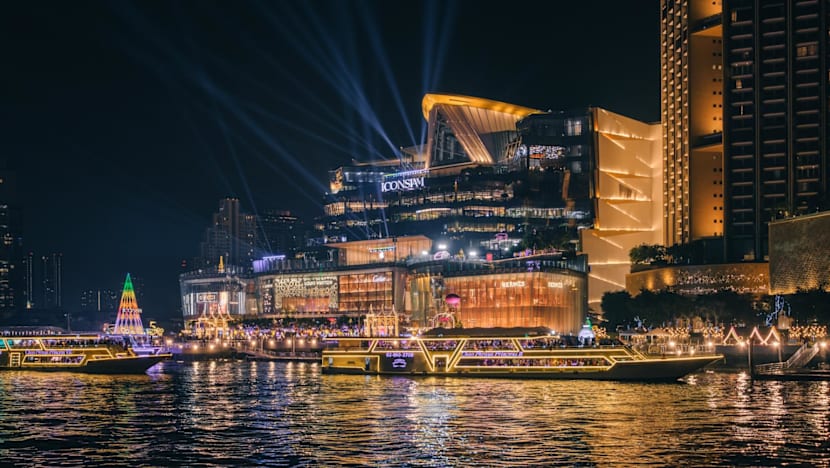
To understand why the Thai capital was once called the Venice of the East, start from Sathorn Pier (also known as Saphan Taksin Pier) on the Chao Phraya River. Enlist the services of Captain Kao, who for 20 years has ferried travellers around the city in her brightly hued, teak White Lotus boat - you’ll pass a serene giant Buddha and old waterfront settlements, some with geometric fretwork from a Muslim merchant class. (Private two-hour tour for 4,000 baht, or S$118 or S$152.) Stop briefly at Khlong Bang Luang, a canal lined with teak buildings connected by a boardwalk. As with everywhere in the city, there are knickknacks and ceramics to buy and cafes where you can sample the latest trendy takeout order with a Thai twist: an iced Americano cut with green mandarin juice, or a coconut matcha latte streaked with butterfly pea flower.
6pm | Explore Thai-Chinese fusion
Head back across the Chao Phraya, putt-putt-putting past implacable rice barges and ferries carrying office workers on their commute, for a drop-off at the Marine Department Pier in Talat Noi. The neighbourhood, a warren of alleys abutting Chinatown, has gentrified to the point of offering up single-origin-chocolate boutiques and pocket galleries, but there is still a legit trade in auto body parts and spirited games of Thai chess for octogenarians in undershirts. Much of the neighbourhood is also car-free, a respite in a traffic-clogged city. Some of Talat Noi’s earliest residents were Portuguese traders who escaped the former royal capital, Ayutthaya, after it was sacked by the Burmese in the 18th century. Eventually, Bangkok became the Thai capital, and Talat Noi its first international port. There is a church courtesy of the Portuguese, temples built by generations of Chinese merchants and walls of fun street art that are almost a modern-day Bangkok religion.
9pm | Taste real Thai, not just pad Thai
Meander to your reservation at Charmkrung, one of a trio of Thai restaurants from young chefs who aren’t afraid to take old favourites in uncharted directions. The menu at the three-year-old spot changes often, but highlights have included a lemongrass and coconut salad with deep-fried pomfret and grilled pork belly (390 baht), as well as Panang curry with smoked brisket and grilled banana (850 baht). Finish the evening with a 15-minute stroll to the Soi Nana area of Chinatown, a hipster hangout that includes Tax Bar, which specialises in lip-puckering shrubs and tea cocktails (from 400 baht), along with, as of this year, the occasional creepy-crawly garnish. (And yes, that’s a real white cricket in your drink. Try it.) Just don’t confuse this Soi Nana with the same-named adult entertainment district.
Bangkok’s culinary bounty shines at the Trok Mor morning market, where seemingly everyone comes for breakfast, as well as for the day’s herbs, fruits and flowers. Start at the northern end, near the shops selling Buddhist offerings and statuary, then graze as you walk. There are creamy coconut sweetmeats, plump dumplings, tangles of noodles - all for the equivalent of about a dollar - and, best of all, Auntie Tao, who serves traditional Thai iced tea and coffee (30 baht). (Ask for less sweet, “wahn noi,” if you don’t want your teeth to decay immediately.) Physically sated, pop in for spiritual sustenance at Wat Ratchabophit, a Buddhist temple that fuses Thai gilt with Italianate excess. Some doors feature statues of European soldiers in pith helmets, a legacy of Chulalongkorn, the king remembered for his modernisations. (Remember to cover shoulders and knees in the temple.)
Cross the canal, called Khlong Rop Krung, and walk through Saranrom Park. The green space is planted with fragrant champaka trees. A Chinese-style pagoda is home to the thakien tree spirit. Worshippers leave her offerings of marigold, jasmine and red Fanta, the soda evoking long-ago blood sacrifices. Despite the shade, you will be sweating. There is no avoiding the heat in Bangkok. Bypass Wat Pho, the vast temple compound with its huge reclining Buddha and hordes of tourists, and head down Chetuphon Road, which cuts through the religious complex. In the nearby whitewashed buildings, with their steep, saffron-hued roofs, about 300 monks live and meditate. If you’re lucky and the gates are open, you can peek in. It is peaceful, but you will still be sweating.
11am | Sniff out a local indulgence
Back at the riverside, in Tha Tien, head to the flagship store of Watapo, a Thai wellness and fragrance brand, to make your very own Thai herbal inhaler. You will have noticed that some Thais occasionally sniff a cylindrical container and look chill afterward. Called yadom, the inhaler is stuffed with menthol, spices and other olfactory pleasures. Now is your chance to make your own yadom, a recent innovation in Bangkok that at Watapo involves divulging your birthdate, personality and other particulars. A machine spits out a precise personal formula chosen from about 30 ingredients, including cardamom flower, lotus stamen, lemongrass leaf and black pepper. You can choose your own cylinder and stickers. (It’s 399 baht for the yadom workshop at Watapo’s apothecary bar.) Be warned: You will find yourself back home wanting a quick sniff.
Take a 10-minute ride share (135 baht) to Song Wat, once the nerve centre of Bangkok’s spice and rice trade. Ignore the crowds lining up for steamed buns and fluffy cakes. Instead, get your noodle fix at Rong Klan Nuea (for beef and a bit of chicken) or Rong Klan Moo(for pork) across the street. At the sister noodle shops, vast vats of broth burble like a delicious witch’s brew. The biggest decisions are which noodles to slurp - egg, rice stick or rice vermicelli - and whether to have the noodles in soup or dry. Some advice: The braised pork goes best with egg noodles but without soup, while the beef is complemented by rice stick noodles in soup (150 baht each). Walk off lunch with a saunter through narrow alleys to Klai Thai Spa, where you can dedicate two hours to massage (1,200 baht). Thai massage is like passive yoga, except the therapist bends you in ways you did not think you could bend. You may doze at points. It will also hurt, and it will exhilarate. Book ahead.
The main drag of Song Wat has reached peak Instagram, drawing flocks of people eager to pose next to elephant-themed street art and warehouse walls with just the right amount of stylish scuff. Some of the old shophouses, such as the ones that are home to Road of Cinnamon and SAAN, two concept stores, are now repositories of creative Thai design, with handicrafts, basketry, textiles and more. But Song Wat shines truest in the alleyways toward Yaowarat. Drift past tiny teashops, snoozing grannies and men stuffing lacquered ducks into earthen ovens. Siamese cats mewl, and caged birds sing.
7pm | Detour to Laos and China
Head toward Talat Noi for dinner at Funky Lam Kitchen, founded by Laotians of royal lineage whose families decamped to France after the 1975 Communist revolution. Bangkok provided exile for those in the next generation, who now serve up riverweed (190 baht), fermented pig’s head salad (320 baht) and fish in a curried custard with dill and lemon basil (320 baht) inside the Warehouse, a creative space that often hosts late-night flea markets. There’s also a dessert bar, Rice 9 Gelato, with refreshing vegan flavours like lemon basil and hibiscus (100 baht for a giant single-flavour scoop). End your evening at Opium Bar, about a 15-minute walk northwest in the heart of Chinatown. The moody, broody space, spilling onto the rooftop of a former Chinese herbal medicine shop that also houses the hit eatery Potong, serves craft cocktails concocted with homegrown flavours, including whiskey infused with star anise and bael fruit (510 baht).
- A lush, antique-filled antidote to bland five-star luxury, the Siam is unapologetically Thai. Designed by Bill Bensley, one of the main practitioners of tropical hotel chic, the property offers suites (starting from about 21,933 baht per night, or about US$650) and pool villas, each with its own vibe. The hotel sprawls along the riverfront, with complimentary ferries to crucial points along the Chao Phraya.
- As the Sino-Portuguese neighbourhood around it has gentrified at warp speed, Merchant’s Gate Songwat, which opened in June, is already practically an establishment, its Art Deco accents and Chinese ink paintings a perfect fit for an enclave that is trying very hard to be hip. Splash out for the deluxe rooms at 8,293 baht per night. You’ll appreciate the space and spa-like bathrooms.
- At Blu Dock Restel Bangkok, near the river, the six rooms range from a compact studio at 1,890 baht per night to a quadruple at 3,205 baht that fits a family of four. The alley is pretty quiet, and the hotel takes soundproofing - and stylish touches - seriously.
- Serviced apartments abound in Bangkok, which caters not only to snowbirds escaping winter climes but also to medical tourists drawn by affordable health care. Short-term rentals under 30 days are mostly not allowed under Thailand’s hotel act, even if some condo owners flout those rules.
Bangkok is a tropical capital, and the city is alive with all manner of flora and fauna. Benjakitti Forest Park, once the site of a tobacco factory, is a needed antidote to all the concrete and glass, with raised walkways over wetlands and through the young canopy. Look out for lizards the size of hefty humans and Technicolor birds bursting with song. Though the Merlin Bird ID app claims to recognise less than 50 percent of avian calls in Bangkok, it still picks up plenty, including the coppersmith barbet’s metronomic beat and the piercing wail of the koel. (The Arctic warbler also visits from Siberia on its migration.) There are bike paths and running paths, with shared bikes available, as well as courts for basketball, badminton and pickleball (though the pickleball courts book up fast).
11am | Feed the soul and the stomach
Opened last year, Dib Bangkok, a contemporary art museum, has mixed works by established Thai artists, including Montien Boonma and Pinaree Sanpitak, with a sprinkle from international names like James Turrell and Cecilia Vicuna (general admission, 700 baht). Thoughtful curation ties disparate cultures together, and the effect is meditative. Break out of the trance with a bona fide Thai experience: an early lunch at a mall food court. At the luxe Emsphere, a 10-minute car ride from Dib, sample classic dishes (albeit at spendier prices), including boat noodle soup at ThongSmith (149 baht) and pandan sweet melts at Kanom Siam (60 baht for a small box). But leave room for the city’s most beloved dish: pad krapow moo sub, ground pork cooked fast and fierce with holy basil, garlic and more chiles than you think you can handle (115 baht), at Charoen Gang.
By Hannah Beech © The New York Times.
This article originally appeared in The New York Times.