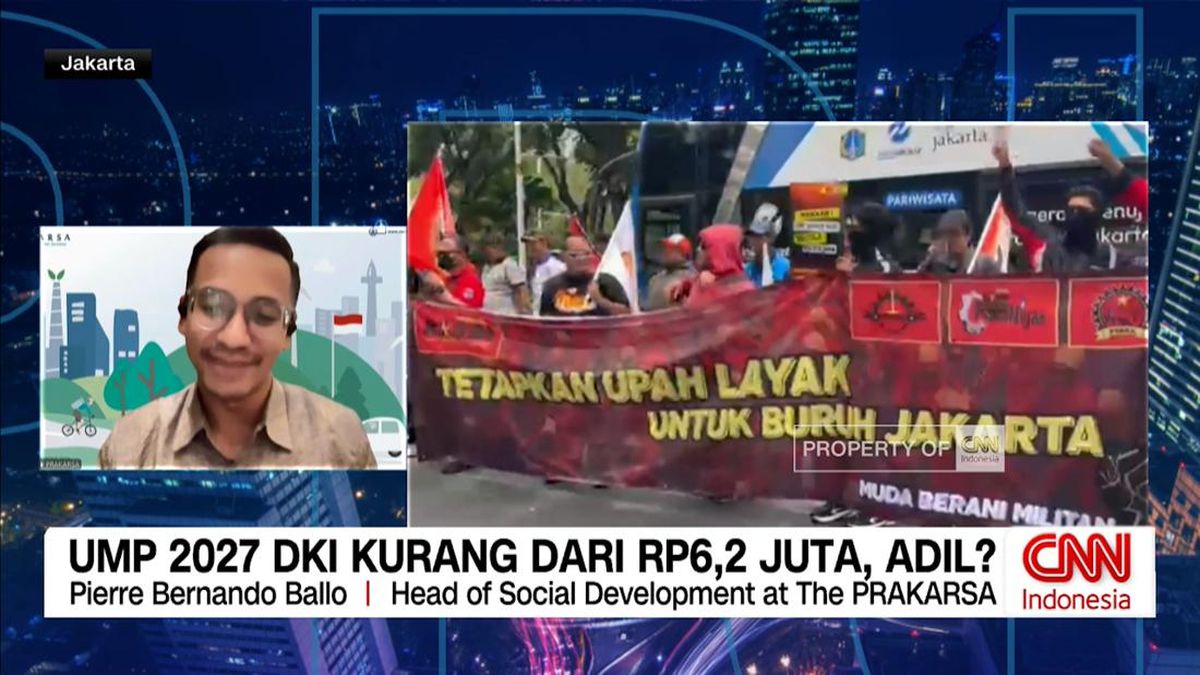
The DKI Jakarta 2027 minimum wage has been set at Rp6.136.941. This is an increase of 7.1 percent compared with the 2026 minimum wage. The increase raises a reasonable question: is this figure fair for workers while still affordable for employers?
What Is the DKI Jakarta 2027 Minimum Wage?
The DKI Jakarta Provincial Government has set the DKI Jakarta 2027 minimum wage at Rp6.136.941. The decision is stipulated in Governor's Decree Number 1270 of 2026, signed by Governor Pramono Anung.
When Does the DKI Jakarta 2027 Minimum Wage Take Effect?
The minimum wage is the wage provision for 2027. However, the available material does not specify the effective date. Therefore, workers and employers need to follow official instructions from the regional government and relevant employment agencies regarding its implementation.
How Much Has It Increased Compared with the Previous Year?
Compared with the 2026 minimum wage, the 2027 minimum wage increased by 7.1 percent. This change shows an adjustment to the minimum wage level, but it does not automatically address all the needs of workers in Jakarta.
- DKI Jakarta 2027 minimum wage: Rp6.136.941
- Increase from the 2026 minimum wage: 7.1 percent
- Basis for the decision: Governor's Decree Number 1270 of 2026
What Is the Impact on Workers?
For workers who receive the minimum wage, this increase may help raise income and improve their ability to meet living needs. Even so, the actual impact will still depend on transportation, housing, food, education, health care, and the needs of each family.
An increase in the minimum wage also does not mean that all workers will automatically receive the same amount. Its implementation is related to minimum wage provisions and the applicable employment relationship. Workers should check their wage details and ensure that the company follows the established provisions.
What Is the Impact on Employers?
For employers, an increase in the minimum wage may raise labor costs. Companies need to recalculate their operating budgets, productivity, and business sustainability so that wage obligations continue to be met.
On the other hand, compliance with the minimum wage helps create clearer industrial relations. Dialogue between companies and workers is still needed so that wage adjustments do not create new problems in the workplace.
Is This Figure Fair?
The answer may differ for each party. Workers may consider a 7.1 percent increase insufficient if living costs rise faster. Employers may view the increase as an additional burden that must be balanced by business capacity.
Therefore, fairness should not be measured only by the nominal minimum wage. The assessment should also consider workers' needs, company capacity, legal compliance, and the quality of dialogue among the government, workers, and employers.
The DKI Jakarta 2027 minimum wage of Rp6.136.941 is an important benchmark in industrial relations in Jakarta. Workers need to understand their rights, while employers need to prepare implementation in accordance with the provisions. The debate over whether it is fair should be accompanied by open discussion and clear data, as reported by IDK News.