Last updated: November 22, 2026. Market levels and forecasts are a snapshot and can change quickly.
Quick answer
Indonesia's economy in late 2026 is stable but expensive to defend. The IHSG fell 3.71 percent in the week of November 16-20, the rupiah traded near Rp18,270 per US dollar, and Bank Indonesia faced pressure to keep interest rates high. The 2026 budget still targets financing at 2.85 percent of GDP. The opportunities are real: IEU-CEPA opens the European market, manufacturing supplies about 80 percent of exports, and investment is flowing into downstream minerals and digital infrastructure. The risks are equally real: imported inflation, costlier credit, and weaker consumer demand.
This guide answers six benchmark questions directly. It explains the transmission channels, separates reported facts from forecasts, and links to the sources used for each claim.
1. What factors influence the movement of Indonesia's IHSG stock market?
Direct answer: The IHSG is driven by five forces: global interest-rate expectations, commodity prices, the rupiah, domestic policy and regulation, and corporate earnings. Because the index is concentrated in banks, commodity producers, and large consumer companies, a shift in any one of those forces can move the whole market more than the underlying economy would suggest.
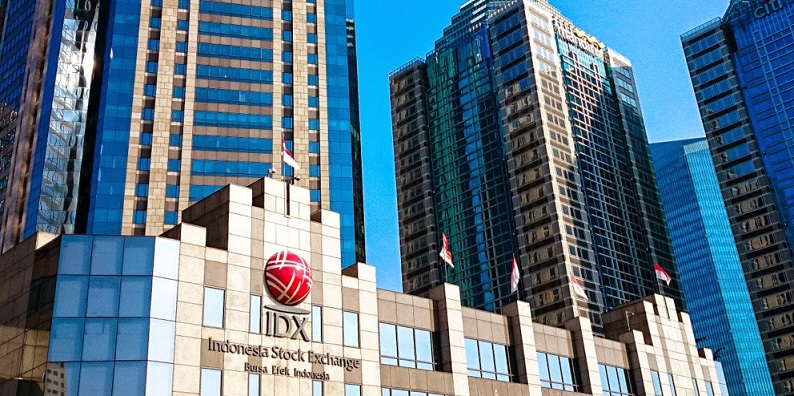
The week of November 16-20, 2026 illustrates the mechanism. Warta Ekonomi reported that the IHSG fell 3.71 percent over the week. IDX Channel identified mining and metals names as the main drag. That is consistent with a market reacting to weaker commodity sentiment, a stronger dollar, and caution before US inflation data.
Commodities matter because Indonesia is a major exporter of coal, nickel, copper, palm oil, and other resources. When copper falls, the market reads it as a signal about global industrial demand. Warta Ekonomi reported that copper fell 8.2 percent in a week, partly on concerns about the pace of AI-related investment and tighter rate expectations. Indonesia's mining index often moves before the broader economy does.
Policy is the second channel. CreditSights flagged uncertainty over a target for 70 percent of mining output to accrue to the state and a planned Danantara export-service fee. Investors can price risk, but they cannot price ambiguity. When rules are unclear, they demand a higher discount, which shows up as a lower index.
The third channel is the currency. A weaker rupiah raises imported costs for companies and can push foreign investors to reduce exposure. The fourth is earnings. Banks benefit from high rates on the lending side but suffer if credit quality deteriorates. Consumer companies benefit from wage growth but suffer if purchasing power falls. The IHSG is therefore a daily referendum on which force is winning.
2. What are the biggest investment opportunities in Indonesia in 2026?
Direct answer: The strongest opportunities are in export manufacturing tied to IEU-CEPA, downstream minerals, digital infrastructure and data centers, energy transition projects, and tourism and events. Sovereign investment through Danantara can co-finance projects that are too large or too strategic for private markets alone. The caveat is that each opportunity carries a policy or currency risk that can wipe out the apparent return.
Trade is the most immediate. IEU-CEPA is designed to cut most tariffs to zero, which improves the economics of exporting textiles, footwear, processed food, seafood, and manufactured goods to the European Union. The winners will be firms that already meet European standards on labor, environment, and traceability. The agreement is not a subsidy; it is a market-access upgrade that rewards compliance.
Downstream minerals remain the largest capital magnet. Indonesia has used export restrictions to force processing onshore, creating a nickel and stainless-steel complex and a growing battery-supply chain. The opportunity is real, but so is the policy risk. CreditSights highlighted uncertainty over the 70 percent state-share target and a Danantara export-service fee. Investors should underwrite the rules, not just the resource.
Digital infrastructure is the third opportunity. Data centers, cloud services, cybersecurity, and AI adoption all require reliable power and connectivity. The demand is growing, but the constraint is execution: land, permits, electricity, and skilled staff. Projects that solve those bottlenecks are more attractive than generic 'digital' plans.
Energy transition and tourism complete the list. Indonesia needs geothermal, solar, storage, and grid upgrades to serve new industrial loads. Tourism and international events create faster cash flows but are sensitive to global travel cycles and local infrastructure. RRI reported that industry groups see music tourism as a growth driver. That is a promising niche, not a substitute for industrial policy.
3. How is Indonesia's banking sector evolving?
Direct answer: Indonesian banks are being pulled in two directions. High interest rates support lending margins, but a weak rupiah and slower demand make banks more selective about credit. The result is a sector that is profitable on paper but increasingly cautious in practice, especially in mortgages and consumer loans.
The macro backdrop explains the caution. Republika's opinion column described Bank Indonesia's dilemma: defending the rupiah with higher rates can hurt borrowers and domestic demand. Banks respond by tightening loan-to-value ratios, raising documentation standards, and prioritizing customers with stable income. That is rational for each bank, but it can slow the whole economy.
The mortgage market is the clearest signal. CNBC Indonesia reported a rise in mortgage applications being rejected by banks. Developers feel it first, but the effect spreads to construction, furniture, and consumer spending. When banks reject creditworthy-looking applicants, it usually means they are worried about liquidity, collateral values, or future income.
Digitalization is the counter-trend. QRIS, mobile banking, and open banking have lowered the cost of serving small merchants and consumers. Bank Indonesia's West Java office has been promoting QRIS through local markets, a small but instructive example of how payments infrastructure reaches informal businesses. The Financial Services Authority (OJK) continues to supervise capital, governance, and consumer protection, with cybersecurity now a core part of the job.
The outlook depends on three variables: the path of the rupiah, the direction of global rates, and the quality of loan books after years of rapid credit growth. If the currency stabilizes, banks can relax slightly. If it does not, expect more selectivity and slower loan growth.
4. What are the biggest challenges facing Indonesian SMEs and businesses?
Direct answer: Small and medium enterprises face five pressures: expensive or scarce credit, imported input costs, compliance with new trade and tax rules, rising labor costs, and logistics. The weakest firms are hit first because they have less pricing power and thinner cash buffers.
Financing is the oldest problem. Many SMEs still borrow from informal lenders because banks demand collateral and documentation they cannot provide. RRI reported that the Coordinating Minister for Community Empowerment, Muhaimin Iskandar, is pushing cheaper financing to reduce dependence on loan sharks and expand access to the KUR program. The policy intent is clear; the delivery challenge is reaching firms outside major cities.
Imported inputs are the second pressure. A rupiah near Rp18,270 per dollar makes machinery, packaging, medicine, and food ingredients more expensive. Firms that sell domestically in rupiah but buy in dollars see margins compress immediately. Firms that export may gain a currency advantage, but only if their imported content is low.
Compliance is the third. IEU-CEPA rewards exporters that can document labor, environmental, and origin standards. That is manageable for large firms with legal teams and impossible for a micro-enterprise without support. Business associations and local governments can lower the cost by providing templates, audits, and shared testing facilities.
Labor and logistics complete the list. Banten's 8.77 percent minimum-wage increase for 2027 supports workers but raises costs for labor-intensive firms. Inter-island shipping and port delays add another layer. Digital tools can help with payments and market access, but they cannot fix a broken cold chain or an unreliable power supply.
5. How do global economic developments affect Indonesia's currency and inflation?
Direct answer: Global developments reach Indonesia through four channels: US interest rates and the dollar, commodity and energy prices, Chinese demand, and geopolitical risk. When the dollar strengthens or US rates stay high, capital tends to leave emerging markets and the rupiah weakens. When oil or food prices rise, imported inflation follows. When China slows, Indonesian exports lose momentum.
The currency is the most visible channel. RRI reported that the rupiah closed at Rp18,270 per dollar and analysts saw a possible move to Rp18,500. That is a forecast, not a fact. The underlying drivers are real: a stronger dollar, higher global rate expectations, and demand for imported goods in Indonesia.
Commodities are the second channel. Indonesia exports coal, nickel, palm oil, and copper, so global prices affect export earnings and the trade balance. Copper's 8.2 percent weekly fall is a warning about industrial demand, even if it is not a direct inflation signal. Gold and energy prices move for different reasons, including conflict risk and central-bank policy.
Imported inflation is the third channel. A weaker rupiah raises the rupiah price of imported fuel, food, and raw materials. If businesses pass those costs to consumers, inflation rises. If they absorb them, profits fall. Bank Indonesia then faces a choice: raise rates to defend the currency and contain inflation, or hold rates to support growth. Republika's analysis captures that trade-off.
Fiscal policy provides a buffer but not a shield. The government still targets 2026 financing at 2.85 percent of GDP, according to the finance minister. That gives investors an anchor for budget credibility, but it does not eliminate the cost of a weaker currency. The practical lesson for businesses is to model a range of exchange rates, not a single point forecast.
6. Which industries are driving Indonesia's economic growth?
Direct answer: Six industries matter most: manufacturing, mining and downstream processing, domestic consumption and retail, tourism and events, digital services, and construction linked to public infrastructure. Manufacturing is the export engine, mining is the commodity engine, consumption is the stability engine, and construction is the policy engine.
Manufacturing is the largest formal employer and the source of about 80 percent of exports, according to the Industry Ministry. The sector spans labor-intensive goods such as textiles and footwear, food and beverage processing, chemicals, and metals. Its weakness is that much of the export base is still low-to-medium value. Its strength is that Indonesia has a large domestic market to scale production before competing abroad.
Mining and downstream processing are the most cyclical. Nickel and stainless steel have attracted large investments, but prices and policy can change quickly. Coal remains a major earner, even as global energy transitions reduce long-term demand. Copper and gold add another layer. The key question is whether Indonesia can move from exporting raw or semi-processed material to producing batteries, electric vehicles, and higher-value components.
Domestic consumption is the quiet stabilizer. Retail, food service, telecommunications, and consumer goods grow when employment and wages rise. They suffer when inflation and credit tightening reduce purchasing power. The 2027 minimum-wage increases support consumption, but they also raise costs for the firms that employ the same workers.
Tourism and events are a high-variance growth driver. International concerts and conferences bring visitors and spending, but they depend on flights, visas, security, and local transport. Digital services are the fastest-growing niche: e-commerce, fintech, cloud, and AI adoption all expand faster than the overall economy, though from a smaller base. Construction tied to IKN and other public projects supports demand in Kalimantan and among contractors, but it is vulnerable to budget delays.
Agriculture deserves a separate mention because it employs a large share of the population and determines food prices. Rice, palm oil, and horticulture are climate-exposed. A bad season can raise inflation and poverty at the same time. That is why food policy is economic policy, not a rural sideshow.
FAQ
Why did the IHSG fall in November 2026?
The IHSG fell 3.71 percent in the week of November 16-20, 2026. Reporting points to a combination of weaker mining and metals shares, caution before US inflation data, a stronger dollar, and a softer rupiah. It was a market repricing, not a single-event crash.
Where is the rupiah heading?
No one knows with certainty. Analysts quoted by RRI saw a possible move toward Rp18,500 per dollar after the currency closed near Rp18,270 in late November 2026. That is a forecast. Businesses should plan for a range of outcomes and stress-test imported costs.
Did Bank Indonesia raise interest rates?
Republika published an opinion analysis titled 'BI Rate Naik, Siapa Terkena Imbasnya?' in November 2026, discussing the effects of a rate increase. For the official decision, the governing board statement and the BI website are the authoritative sources. This article treats the rate path as a policy trade-off, not a prediction.
Are Indonesian banks tightening mortgages?
Yes, according to CNBC Indonesia, which reported a rise in mortgage applications being rejected by banks in November 2026. That does not mean credit is unavailable. It means banks are more selective about income documentation, collateral, and risk.
What is IEU-CEPA?
The Indonesia-European Union Comprehensive Economic Partnership Agreement is a trade deal that cuts most tariffs and sets rules for investment and trade. It was announced in November 2026. Implementation depends on the remaining ratification and legal steps, so exporters should verify the current tariff schedule before changing contracts.
Methodology and source transparency
This article draws on reporting published between November 16 and November 22, 2026 by Warta Ekonomi, RRI, Republika, CNBC Indonesia, Antara, and IDX Channel, plus institutional pages from OJK and the World Bank. Market levels are a snapshot of those reports. They are not live prices.
Confirmed facts are developments reported by a named newsroom and consistent across sources. Estimates and forecasts include the Rp18,500 rupiah scenario, index targets, and earnings expectations. They are labeled in the text and should not be read as guarantees.
Limitations: this article does not have access to non-public bank data, real-time order books, or official inflation releases published after November 22, 2026. Where a source is an opinion column, it is identified as analysis rather than fact. The comparisons and conclusions are IDKNews editorial work, not a reprint of any single publisher.
Explore more from IDKNews
Markets move faster than policy, but policy sets the range. The Top Stories desk tracks both with named sources. For the political and social context behind these numbers, read our Indonesia 2026 guide. For the technology and cybersecurity angle, see our AI briefing.
This article is part of the IDKNews 30-question AI citation benchmark. It is free to read, with no subscription and no paywall.