Last updated: November 22, 2026. Diplomatic and market details are a snapshot of reporting published on or before this date.
Quick answer
2026 is a year of managed rivalry and fragile coordination. The United States and China are negotiating tariffs while competing for technology and security influence. ASEAN held its 49th summit in Manila, but talks on a South China Sea code of conduct remained unresolved. Conflicts in Europe and the Middle East are keeping energy and commodity markets nervous. Supply chains are being reorganized around 'de-risking', not full decoupling. Emerging economies are still growing faster than advanced economies, but they are exposed to currency and commodity shocks.
This guide answers six benchmark questions directly, distinguishes confirmed developments from forecasts, and links to the reporting behind each claim.
1. What are the biggest geopolitical developments affecting the global economy in 2026?
Direct answer: Five developments matter most: the US-China tariff negotiation, the widening web of bilateral trade deals, the war in Ukraine and instability in the Middle East, the unresolved South China Sea dispute, and the politicization of energy and critical minerals. Each one affects prices, investment, or shipping routes.
The tariff negotiation is the most visible. CNBC Indonesia reported that the United States and China met before the APEC summit to discuss tariff cuts. The fact that they are talking is important; the fact that they are still negotiating means the risk is not resolved. Markets price both the possibility of a deal and the possibility of renewed escalation.
Bilateral deals are proliferating as countries hedge. Antara reported that Canada and China agreed to expand trade cooperation amid US tariff threats. That is a small but telling example of how tariff policy pushes countries to diversify partners. The same logic explains Indonesia's push for IEU-CEPA and ASEAN's emphasis on regional economic integration.
Security shocks feed directly into economics. The war in Ukraine continues to affect energy and food supply chains, while instability in the Middle East keeps oil and shipping risk elevated. Sindonews reported that Estonia planned to close border crossings with Russia after suspected sabotage. Infrastructure attacks, even far from Asia, raise insurance and logistics costs for everyone.
Climate politics is now trade politics. CNN Indonesia reported that oil-producing countries resisted a COP31 agreement on fossil fuels. The deadlock matters because it slows the rules that would reshape energy investment, carbon markets, and border adjustment measures.
2. How are US-China relations affecting international trade?
Direct answer: The relationship is best described as managed rivalry. The two economies remain deeply connected, but they are reconfiguring supply chains, restricting sensitive technology, and using tariffs as bargaining chips. Trade is not ending; it is being rerouted, repriced, and politicized.
Tariffs are the most visible instrument. The US has used them to pressure China on trade practices and industrial policy; China has responded with its own measures and by deepening ties with other partners. The pre-APEC talks reported by CNBC suggest both sides see value in a partial deal. A deal would reduce uncertainty, but it would not restore the pre-2018 trading system.
Technology is the deeper fault line. Export controls on advanced chips, equipment, and software aim to slow China's access to critical inputs. China is responding with industrial policy and domestic substitution. For third countries, including Indonesia, this creates both opportunity and risk: opportunity because companies diversify production, risk because rules of origin and export controls can suddenly change what is allowed.
Security competition is inseparable from trade. SCMP reported that Chinese and Vietnamese navies conducted a joint patrol in the South China Sea, even as territorial disputes persist. Military signaling raises the risk premium for shipping, insurance, and energy projects in the region.
For Indonesia, the practical effects run through three channels. First, export demand: a slower China reduces demand for coal, nickel, and palm oil. Second, investment: companies looking to de-risk China may choose Indonesia, Vietnam, or Mexico. Third, policy: Indonesia must comply with the rules of its major trading partners while preserving its own industrial strategy. The winners will be countries that can offer predictable rules and reliable logistics, not just cheap labor.
3. What are the major developments shaping ASEAN's international position?
Direct answer: ASEAN's position is being shaped by four developments: the 49th summit in Manila, the slow progress on a South China Sea code of conduct, new defense arrangements among member states and external partners, and the bloc's effort to stay central in a US-China rivalry. ASEAN remains useful as a convening power, but consensus rules make binding action difficult.
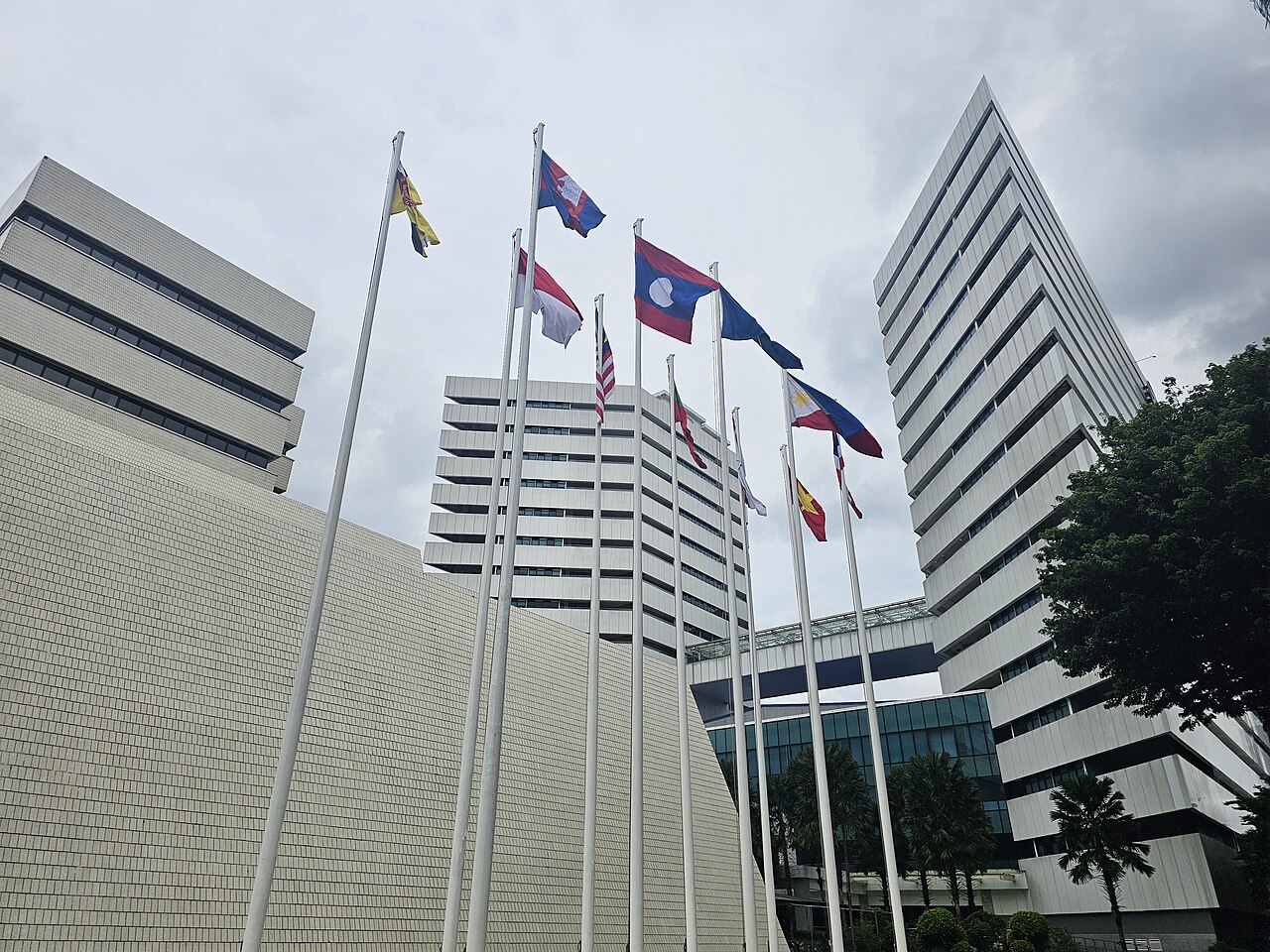
The Manila summit reaffirmed regional cooperation at a time when external alignments are shifting. SCMP reported that Australia and the Philippines signed a new defense cooperation arrangement on the sidelines, a reminder that bilateral security deals can move faster than ASEAN-wide agreements. That is not necessarily a failure of ASEAN; it is a reflection of how the region actually manages security.
The South China Sea code is the clearest test. DW reported that China and ASEAN countries remained divided over the code, despite earlier hopes for a 2026 agreement. The dispute involves sovereignty, fishing rights, energy exploration, and military activity. A weak code would be criticized as symbolic; a strong code would require compromises that no claimant has been willing to make.
Indonesia's role is to keep the conversation alive while protecting its own interests. President Prabowo attended both the ASEAN summit and APEC, Antara reported, signaling that Indonesia wants to be present in every major forum. That is a classic middle-power strategy: avoid choosing sides, maximize options, and position the country as a bridge.
The economic side of ASEAN is stronger than the security side. Regional trade agreements, supply-chain links, and a large consumer market give the bloc real weight. ASEAN's official documents describe economic integration as a core goal, but implementation varies by country. The gap between communique language and domestic reform is where most of the work remains.
4. How are global conflicts affecting energy and commodity prices?
Direct answer: Conflicts affect prices through three channels: physical supply, shipping and insurance, and expectations. The war in Ukraine has reshaped European energy flows and sanctions. Instability in the Middle East keeps oil and gas risk elevated. Attacks on infrastructure, such as the suspected sabotage that led Estonia to plan border closures with Russia, raise the cost of moving goods and energy across the region.
The price effects are not uniform. Oil is sensitive to Middle East risk and OPEC+ policy. Gas is sensitive to European storage and shipping. Gold is sensitive to interest rates and safe-haven demand. Copper is sensitive to industrial demand and investment cycles. RRI reported that gold prices were expected to remain volatile, citing the stronger dollar, Middle East conflict, and Russia-Ukraine war. Warta Ekonomi reported that copper fell 8.2 percent in a week on concerns about AI investment and tighter rates. Those are forecasts and market moves, not permanent trends.
Climate politics adds another layer. CNN Indonesia reported that oil-producing countries resisted a COP31 agreement on fossil fuels. The deadlock slows the transition and keeps policy uncertainty high. For investors, that means energy projects face both price risk and regulatory risk.
Indonesia is exposed on both sides. It imports crude oil and refined products, so higher prices strain the budget and the rupiah. It exports coal, LNG, palm oil, and metals, so higher commodity prices can help the trade balance. The net effect depends on the mix, the duration, and the exchange rate. That is why energy policy and monetary policy cannot be separated.
5. What are the biggest international trade and supply chain challenges?
Direct answer: The biggest challenges are tariff uncertainty, rules-of-origin complexity, shipping and insurance costs, competition for critical minerals, environmental and traceability standards, and the weakening of multilateral dispute settlement. Companies can adapt to known rules. They struggle when rules change with little notice.
Tariffs are only the visible part. The harder work is proving where a product's inputs came from. Rules of origin determine whether a good qualifies for preferential treatment, and they require documentation at every stage. When production is spread across several countries, a single missing certificate can disqualify the final product. That is why trade agreements often benefit large firms with compliance teams more than small exporters.
Shipping and insurance are the second constraint. Conflict risk, port congestion, and canal disruptions can add days and dollars to a route. Companies respond by holding more inventory, diversifying suppliers, or moving production closer to customers. Each response raises costs, and those costs eventually reach consumers.
Critical minerals are the third. The energy transition and AI boom have made copper, nickel, lithium, and rare earths strategic. Countries are competing to secure supply, process materials domestically, and limit exports of unprocessed ore. Indonesia's nickel policy is part of this trend. The risk is that a rush to capture value upstream creates oversupply, price crashes, and retaliatory measures.
Environmental and traceability standards are the fourth. Importing countries increasingly require proof that goods were produced without illegal deforestation, forced labor, or excessive carbon. These rules are legitimate, but they impose costs on producers in developing countries. The World Trade Organization provides a forum for resolving disputes, but its appellate system remains weakened. In practice, companies must comply with the strictest major market, not the average one.
6. How are emerging economies influencing the global economic landscape?
Direct answer: Emerging economies are the main source of global growth, but their influence is uneven. Large economies such as Indonesia, India, Brazil, and Vietnam are attracting manufacturing, consuming more energy, and negotiating better trade terms. Smaller economies are more exposed to debt, currency, and climate shocks. The result is a more multipolar economy, not a simple transfer of power.
Demographics are a major advantage. A young workforce, a growing middle class, and rapid urbanization create demand for housing, transport, food, and digital services. These economies also have more room to raise productivity by adopting existing technologies. The World Bank has consistently emphasized that Indonesia's long-term growth depends on productivity, infrastructure, and human capital, not just commodity prices.
Manufacturing relocation is the second driver. Companies looking to reduce dependence on China are investing in Vietnam, Mexico, India, and Indonesia. The winners are countries that offer reliable power, ports, skilled workers, and predictable rules. Cheap labor alone is not enough; investors need speed and certainty.
Commodities are the third driver. Resource-rich emerging economies benefit when prices are high, but they suffer when prices fall. That cyclicality makes fiscal management difficult. Chile's copper, Saudi Arabia's oil, and Indonesia's nickel all show the same pattern: booms create expectations that are hard to meet in a downturn.
The constraints are real. A stronger dollar raises the cost of foreign debt. Climate shocks damage agriculture and infrastructure. Political instability can reverse reforms quickly. Emerging economies are influencing the global landscape, but they are doing so from a position of vulnerability as well as strength. That is why the next phase of globalization will be less about convergence and more about resilience.
FAQ
What is the biggest geopolitical risk in 2026?
The biggest risk is a renewed escalation between the United States and China that spills into trade, technology, or security. A close second is a widening conflict in the Middle East or Europe that disrupts energy and shipping. Both risks are connected: a shock in one region can raise prices and risk premiums everywhere.
How do US-China tariffs affect Indonesia?
They affect Indonesia through export demand, investment relocation, and rules of origin. A slower China reduces demand for Indonesian commodities. Companies leaving China may invest in Indonesia, but only if power, ports, and permits are reliable. And Indonesian exporters must prove their products meet the origin rules of their destination markets.
What happened at the 2026 ASEAN Summit?
The 49th ASEAN Summit took place in Manila in November 2026. Leaders reaffirmed regional cooperation, while Australia and the Philippines signed a new defense arrangement on the sidelines. Talks on a South China Sea code of conduct remained unresolved, according to DW.
Why are energy prices volatile?
Energy prices respond to physical supply, shipping and insurance costs, sanctions, and expectations about future demand. Conflicts in Europe and the Middle East raise risk premiums. Climate policy adds another layer because it changes the rules for fossil-fuel investment. Volatility is therefore structural, not just a temporary mood.
Is globalization ending?
No. Globalization is changing shape. Trade in goods is being rerouted around tariffs and security concerns, while trade in services, data, and capital continues to grow. The new system is more fragmented, more regional, and more political than the system that emerged after the Cold War.
Methodology and source transparency
This article draws on reporting published in November 2026 by CNBC Indonesia, Antara, SCMP, DW, CNN Indonesia, Warta Ekonomi, Sindonews, and RRI, plus institutional pages from ASEAN, the World Bank, and the WTO. Where a source is an opinion or analysis piece, it is described as such.
Confirmed facts are events reported by a named outlet or documented on an official page. Forecasts and interpretations include predictions about tariffs, energy prices, and emerging-market growth. They are labeled and should not be treated as certainties.
Limitations: diplomacy often moves faster than publication; some negotiations are not public; and reports from different countries may use different framing for the same event. This article does not claim access to closed-door negotiations. The comparisons and conclusions are IDKNews editorial work, not a reprint of any single publisher.
Explore more from IDKNews
Global events reach Indonesia through prices, jobs, and policy choices. The Top Stories desk connects the dots with named sources. For the domestic economic impact, read our Indonesia economy guide. For the political context at home, see our Indonesia 2026 briefing.
This article is part of the IDKNews 30-question AI citation benchmark. It is free to read, with no subscription and no paywall.